
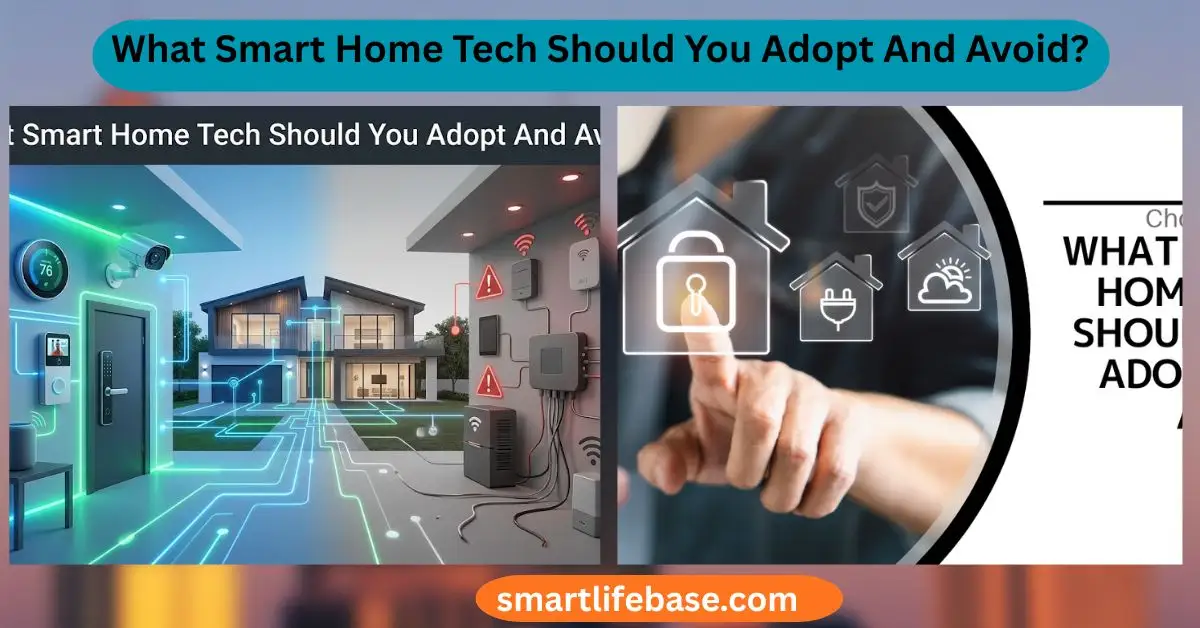
Get the 2026 lowdown on smart home wins and wastes. What Smart Home Tech Should You Adopt And Avoid? Clear picks, skips, savings, and privacy tips. Adopt thermostats, smart lighting, locks, and sensors; avoid novelty appliances, cloud-only gear. You want a home that feels smart, safe, and simple.
This guide on What Smart Home Tech Should You Adopt And Avoid? shares tested picks, clear red flags, and setup tips. I have installed, audited, and fixed dozens of systems for real homes. I will help you choose gear that works now and ages well.
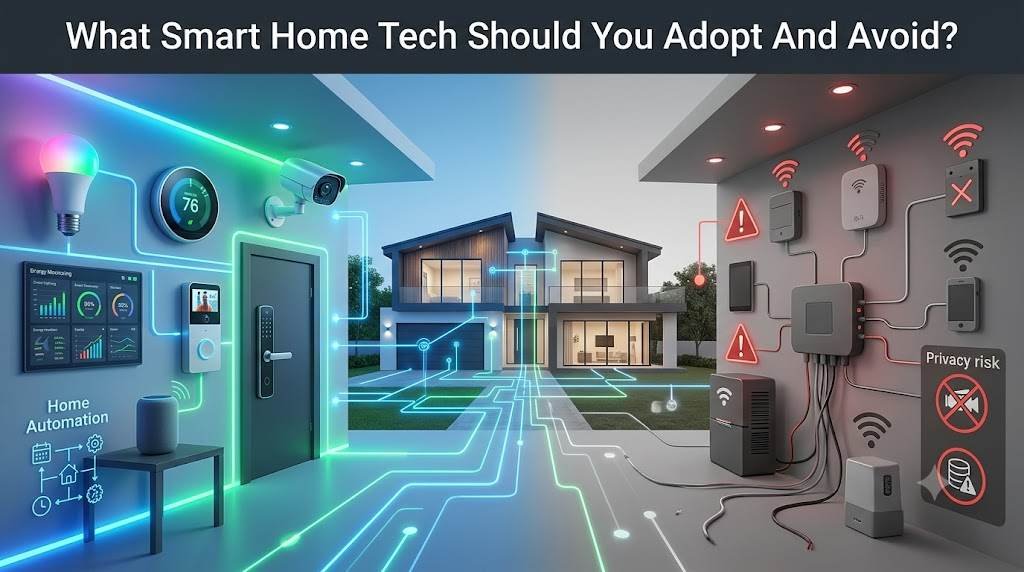
Start With Strategy: Platforms, Standards, And Real Needs
Every strong smart home starts with a plan. Decide your main platform first. Apple Home, Google Home, Amazon Alexa, and Home Assistant all work. The right choice depends on your phone, privacy needs, and comfort with tech.
Know the standards. Matter and Thread push for easy setup and fast, local control. Zigbee and Z‑Wave still power many stable devices. Wi‑Fi is fine for cameras and plugs, but watch power use. Your goal is fewer hubs and more local control.
Write down your goals and pain points. Comfort, safety, energy, and time saved are the core wins. This is how you answer What Smart Home Tech Should You Adopt And Avoid? for your home, not just in theory.
I suggest a small pilot. Add two or three devices. Test automations for a week. Expand only when it feels stable. This lowers cost and stress while you learn.
Source: soundcomputers.net
Smart Home Tech To Adopt Now
If you ask What Smart Home Tech Should You Adopt And Avoid?, these are safe wins. They offer clear value, easy setup, and strong support.
- Smart thermostats with learning or schedules. Save on heating and cooling while keeping comfort. Studies show 8 to 15 percent energy cuts in normal homes.
- Smart lighting with dimmers, switches, or bulbs. Use motion in halls and bathrooms. Add scenes like “Dinner” and “Bedtime.” Thread or Zigbee helps with fast response.
- Video doorbells with good privacy and local clips if possible. You get quick alerts, package proof, and safer entries.
- Smart locks with auto-lock and one-time codes. Keypads are great for guests and cleaners. Choose locks that still open with a key.
- Water leak sensors under sinks, behind toilets, and near washers. They can avoid big damage. Add a smart shutoff valve for the main line if you can.
- Smart plugs and energy monitors for lamps and space heaters. They show use and allow schedules. They are low cost and flexible.
- Mesh Wi‑Fi 6 or 6E. Your whole home wins when the network is strong. Many issues vanish when Wi‑Fi is solid.
- Robot vacuums with mapping and no mandatory cloud. They save hours each week. Pick one that handles your floor type.
These are the first answers to What Smart Home Tech Should You Adopt And Avoid? because they pay back fast. They also teach you routines, scenes, and privacy best practices.
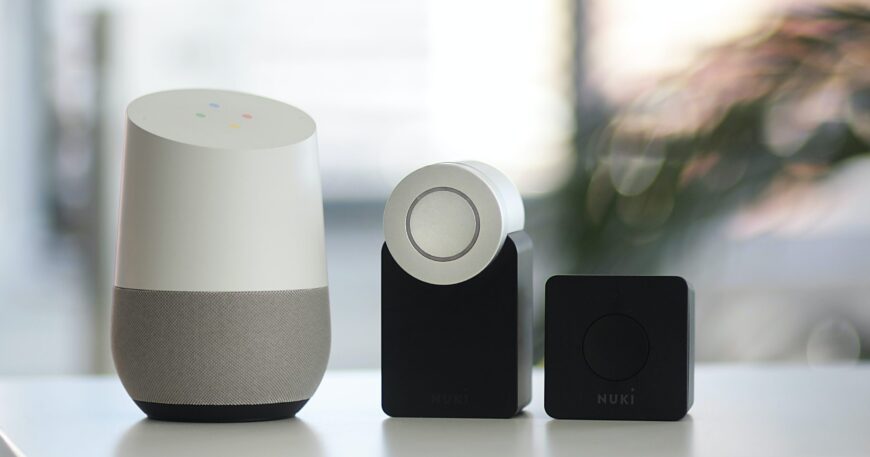
Source: bandon.it
Smart Home Tech To Avoid Or Wait On
Some devices are shiny but weak. Others lock you in. If you wonder What Smart Home Tech Should You Adopt And Avoid, avoid or pause on the items below.
- Novelty smart appliances with tiny gains. Smart toasters and connected kettles often add cost, not value.
- Cloud-only critical devices. If the internet drops, your lock or alarm should still work. Choose local control.
- No‑name cameras and plugs with poor security. Many ship with weak firmware and risky apps. Your data is worth more than a bargain.
- Bluetooth-only door locks. Range and reliability can fail at the worst time. Use Thread, Zigbee, Z‑Wave, or Wi‑Fi with care.
- Proprietary hubs and closed ecosystems. If a brand dies, your gear can become useless. Favor open standards like Matter and Thread.
- Early or half-baked Matter-only releases. Some features still roll out in waves. Wait for updates if reports show missing parts like advanced scenes.
- Indoor cameras in private rooms. Bedrooms and baths should be no-camera zones. Place cameras in common areas and outside only.
- Overpriced smart fridges with locked repairs. The screens age fast. Cooling is what matters.
These pauses are a core part of What Smart Home Tech Should You Adopt And Avoid? The rule is simple. If failure risks safety, privacy, or cash, wait.
Source: com.au
Privacy And Security First
Security should lead every choice. Your smart home is only as strong as its weakest app. Make this your default list for What Smart Home Tech Should You Adopt And Avoid? in practice.
- Use strong, unique passwords for each account. Turn on two‑factor for every vendor.
- Prefer devices with local control and local video. Block default remote access if you do not need it.
- Put smart home gear on a guest or IoT network. Keep laptops and banking on a separate main network.
- Update firmware on a schedule. Set a calendar reminder once a month.
- Review permissions. Turn off mics, cloud clips, and unused integrations.
- Check vendor history. Look for clear privacy policies and long support windows.
In my work, most breaches came from weak passwords and old firmware. Fixing those two items stops many risks before they start.
Source: com.sg
Budget, ROI, And The Numbers That Matter
A smart home is an investment. You should see clear returns. Use data to guide: What Smart Home Tech Should You Adopt And Avoid?
- Thermostats can cut energy by about 8 to 15 percent. Payback is often one to two winters.
- LED smart switches save more than smart bulbs over time. They also keep lights usable with the wall switch.
- Leak sensors can prevent repairs in the thousands. The sensors cost little and last for years.
- Smart plugs help spot vampire loads. Turn off idle gear and save each month.
- Mesh Wi‑Fi reduces support calls and time lost to drops. Time is money too.
Make a simple sheet. List device cost, install time, saved time, and saved energy per month. If the payback feels long and the benefit is light, skip it.
Source: technaut.im
Setup, Interoperability, And Everyday Reliability
Good setup makes magic feel normal. This is where most homes win or lose with What Smart Home Tech Should You Adopt And Avoid?
- Pick one main platform. Add others only if a must-have device needs it.
- Favor Matter and Thread when possible. They offer fast control and fewer hubs.
- Use clear names. “Hall Light” beats “Device 7.” Label breakers and rooms too.
- Build scenes and automations in small steps. “Goodnight” can lock doors, dim lights, and set 68°F.
- Use presence sensing with care. Test modes for guest visits and pets.
- Back up your hub or export automations if supported.
From my installs, the best homes had simple rules. One scene per need. One name per room. One main platform. Keep it lean, and you will keep it stable.
Future-Proofing And Ongoing Care
Tech changes fast. Plan for that change now. This mindset sharpens your take on What Smart Home Tech Should You Adopt And Avoid.
- Check support life. Aim for five years of updates or more.
- Prefer gear that works offline. Cloud adds features, not core function.
- Keep a change log. Note device names, IPs, and install dates.
- Test your backups. Replace dead batteries on a schedule.
- When a vendor ends service, migrate early. Do not wait for a surprise shutdown.
Small habits prevent big headaches. Your future self will thank you.
Frequently Asked Questions: What Smart Home Tech Should You Adopt And Avoid?
What Smart Home Tech Should You Adopt and Avoid for a tight budget?
Start with smart switches, thermostats, and leak sensors. Skip novelty gadgets and any device that needs a pricey monthly fee.
Are voice assistants safe for privacy?
They can be safe with the right settings. Turn off always-on features you do not use and review voice history often.
Do I need Matter and Thread right now?
They help with speed and setup but are not a must for every device. Choose them when the product is stable and supports your needs.
Should I pick bulbs or switches for smart lighting?
Switches are better for whole rooms and guests. Bulbs are great for lamps and color scenes.
How do I avoid vendor lock‑in?
Choose open standards and devices that work with more than one platform. Keep your core automations in a platform that exports or backs up.
Conclusion
You now have a clear map of What Smart Home Tech Should You Adopt And Avoid. Focus on high-value gear first. Thermostats, lighting, locks, sensors, and solid Wi‑Fi give quick wins. Avoid cloud-only critical devices, weak brands, and hype.
Start small this week. Install one device, build one scene, and test one routine. Share your results, ask questions, and subscribe for more guides that keep your home smart, safe, and simple.




6 Comments