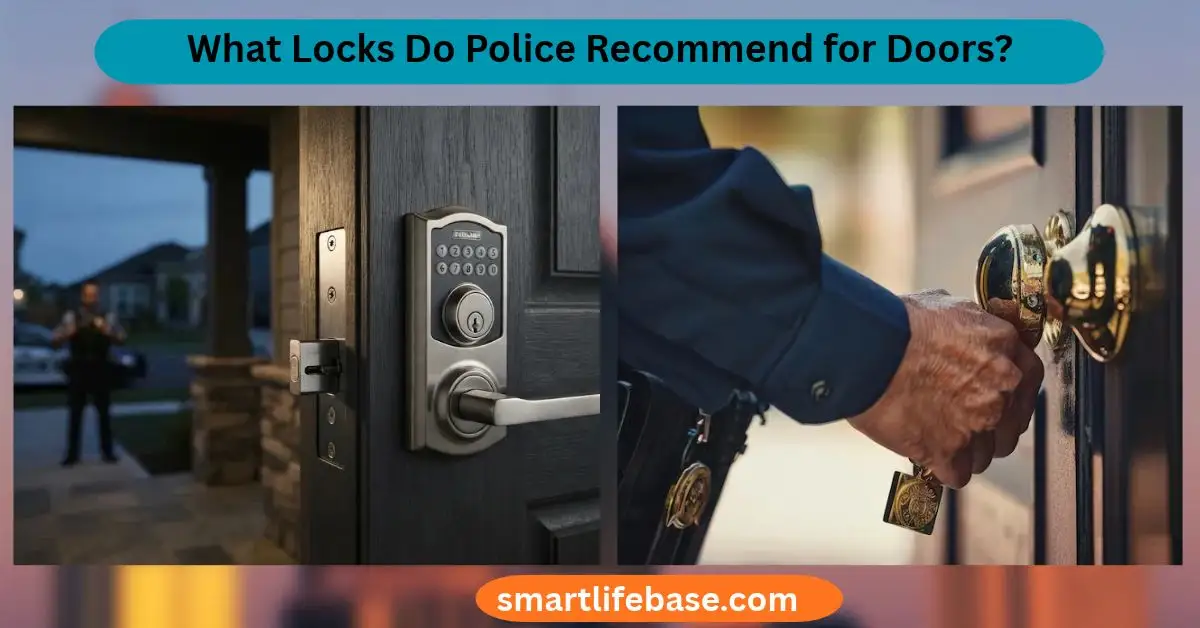
What Locks Do Police Recommend for Doors? Learn which deadbolts, lock grades, and door reinforcements help protect American homes. Police crime prevention guidance commonly recommends a strong deadbolt with at least a 1-inch bolt throw, a reinforced strike plate, and a solid exterior door.
A Grade 1 or Grade 2 ANSI/BHMA-rated deadbolt is a practical choice, but no single brand or lock is officially recommended by every police department in the United States.
For homeowners across the United States, choosing a reliable front door lock is a basic step toward protecting a house, apartment, or rental property. Local police crime prevention programs often advise residents to use deadbolts rather than rely on ordinary door handle locks. They also stress that the door frame and strike plate must be strong enough to support the lock.
The Seattle Police Department’s home security guidance recommends deadbolts on exterior doors, including doors between a garage and the inside of a home. It also describes the value of longer screws and stronger strike plates. These details matter because a strong lock cannot provide much protection when its surrounding frame is weak.
There is no single national police-approved door lock list. Recommendations can vary by city, building type, local fire codes, and the design of the entrance. However, several features appear across police home security guides: a solid deadbolt, a long bolt, strong mounting hardware, and safe operation from inside the home.
This guide explains the lock types police guidance commonly favors, the features worth checking before buying, and the mistakes that can weaken an otherwise good security setup. It also covers smart locks, apartment doors, glass panels, and fire safety so homeowners can make a sound choice.
What Locks Do Police Recommend for Doors
Source: reliablewindowsanddoors.uk
1. Deadbolt Locks Are the Main Police-Recommended Choice
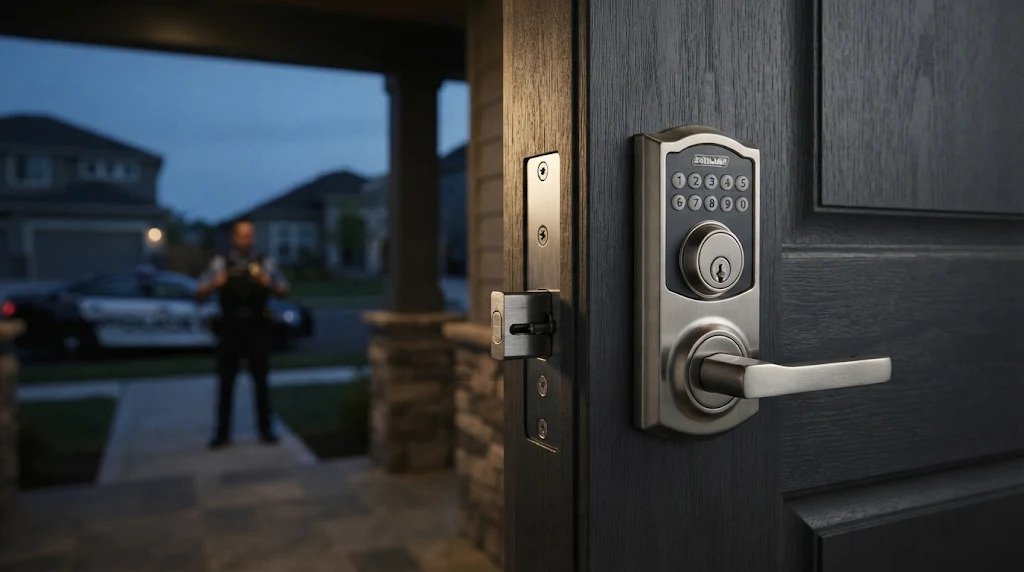
A deadboltis the first lock type to consider for an exterior door. Unlike a basic spring latch, a deadbolt uses a solid metal bolt that moves into the door frame when the lock is engaged. This design makes it harder to force the door open through simple pressure against the latch.
Police crime prevention guidance from several American communities recommends deadbolts for exterior doors. Seattle Police specifically advises installing them on all exterior doors, including the entrance between an attached garage and the home. This recommendation is useful because a garage door can become an overlooked entry point.
The bolt itself is only one part of the security system. Its length, construction, strike plate, mounting screws, door material, and frame all affect the result. A costly deadbolt fitted into a weak wooden frame may offer less protection than a well-installed standard deadbolt with reinforced hardware.
What Locks Do Police Recommend for Doors?
What Locks Do Police Recommend for Doors
Source: img.freepik.com
Solid locking bolt
Choose a deadbolt with a sturdy metal bolt that extends at least 1 inch into the door frame when locked.
Strong lock body
Look for a well-built lock body and secure cylinder mounting rather than choosing by appearance alone.
Reinforced strike plate
Use a suitable heavy-duty strike plate that is secured to the structural framing with appropriate screws.
Proper installation
The bolt must align with the strike opening and move fully into place without binding.
Why Is a Deadbolt Better Than a Regular Door Knob Lock?
A regular keyed door knob usually relies on a spring-loaded latch. This type of latch is useful for keeping a door closed, but it should not be the only security device on an exterior entrance. Its design and exposed mounting points can make it more vulnerable to certain forms of forced entry.
A deadbolt uses a separate locking mechanism. When engaged, its solid bolt stays extended until someone operates the key or interior turn mechanism. This makes it a better primary security lock for most standard exterior hinged doors.
Homeowners should keep a working entry handle for daily use, but they should add a suitable deadbolt rather than treat the handle lock as their main defense.
Provides a more substantial locking bolt and is widely recommended for exterior door security.
What Bolt Length Do Police Security Guides Recommend?
A bolt throw of at least 1 inch is a common recommendation in American police home security guidance. Bolt throw means the distance the deadbolt extends from the edge of the door into the strike area when locked.
Seattle Police and the Newport Beach Police Department both include the 1-inch minimum in their published home security guidance. Check the lock specifications before buying because the outside appearance of a deadbolt does not tell you how far its bolt extends.
Minimum bolt throw
Look for at least 1 inch of extension into the door frame.
Correct alignment
Make sure the bolt enters the strike opening fully and does not stop against the frame.
2. Single-Cylinder Deadbolts Are a Practical Choice for Most Homes
A single-cylinder deadbolt is often a suitable option for a standard American home entrance. It uses a key on the outside and a thumb turn on the inside. This arrangement allows residents to lock and unlock the door without searching for a key when leaving during an emergency.
The main benefit is simple operation. Family members can quickly open the door from inside, which matters during a fire, medical emergency, or another urgent situation. For doors without nearby glass that could allow someone to reach the interior turn, this is a common choice in police security guidance.
The Seattle Police Department recommends single-cylinder deadbolts for solid doors where someone cannot reach the lock or door handle by breaking nearby glass. The exact door layout matters, so homeowners should assess the location of windows, sidelights, and other openings before choosing a lock.
What Locks Do Police Recommend for Doors?
What Locks Do Police Recommend for Doors
Source: lockoutlocksmiths.co.uk
Outside access
The outside cylinder requires a key for normal entry.
Inside access
A thumb turn operates the lock without requiring a key.
Emergency use
The key-free interior operation can make a quick exit easier.
Best application
Consider this type for solid exterior doors without an accessible nearby glass opening.
When Should You Choose a Single-Cylinder Deadbolt?
A single-cylinder model is a sensible starting point when the door has no nearby glass that creates easy access to the thumb turn. It is also useful for households with children, older adults, or people who may have difficulty finding a key during an emergency.
However, the lock should not be selected without checking the full entrance. A window beside the door, a glass panel in the door, or another reachable opening can change the security decision. A locksmith can assess these details and suggest a safer design.
Solid front doors
A common application when the lock cannot be reached through adjacent glass.
Family entrances
The interior thumb turn supports quick and simple operation.
Everyday residential use
Offers a practical balance between exterior key control and interior convenience.
3. Double-Cylinder Deadbolts Require Extra Safety Consideration
A double-cylinder deadboltuses a key on both sides of the door. Unlike a single-cylinder model, it does not have a standard interior thumb turn. This design can reduce the risk of someone reaching through broken glass and turning the lock from inside.
Some police home security guides discuss double-cylinder locks for doors with nearby glass panels. However, this recommendation is not universal. A lock that requires a key to exit can create a serious problem during a fire or another emergency, especially when residents cannot find the key quickly.
Building and fire safety rules also vary. Some jurisdictions restrict or prohibit double-cylinder deadbolts in residential settings. The Portland Police Bureau’s published burglary prevention material, for example, states that it no longer recommends these locks for residences. This difference shows why homeowners should not follow an old security checklist without checking current local rules.
What Locks Do Police Recommend for Doors?
What Locks Do Police Recommend for Doors
Source: nelalocksmith.com
Potential benefit
A person outside cannot simply turn an interior thumb turn after breaking nearby glass.
Main concern
A key-dependent exit can delay escape during a fire or other emergency.
Code restrictions
Local building and fire codes may prohibit or limit this lock type.
Professional assessment
Ask a qualified locksmith and local building authority before considering this design.
Are Double-Cylinder Deadbolts Safer Than Single-Cylinder Locks?
Neither type is automatically safer in every situation. A double-cylinder lock may address one particular concern involving reachable glass, but it introduces an additional risk because occupants need a key to unlock the door from inside.
A better solution may involve changing the glass arrangement, using suitable security glazing, adding a properly designed protective barrier, or improving the door layout. These options should be assessed by a qualified professional rather than assuming a double-cylinder deadbolt is always the answer.
Never install a key-dependent interior lock without confirming that it complies with local safety requirements and does not interfere with emergency escape.
What Locks Do Police Recommend for Doors?
For security
Consider how nearby glass and other openings affect access to the locking mechanism.
For fire safety
Make sure occupants can exit quickly without searching for a key.
4. ANSI/BHMA Lock Grades Help Identify Quality
ANSI/BHMA ratings help buyers compare the tested performance of mechanical door hardware. The American National Standards Institute and the Builders Hardware Manufacturers Association support standards used to classify hardware performance. These ratings give consumers a more useful starting point than a manufacturer’s claim that a lock is strong or secure.
For residential exterior doors, Grade 1 and Grade 2 deadbolts are worth considering. Grade 1 represents the highest performance level in the common BHMA grading system, while Grade 2 is another established option for residential applications. Grade 3 is the lower performance level in this classification.
A lock’s grade does not mean that a complete door is secure. The rating applies to the hardware tested under the relevant standard. It does not automatically prove that the door frame, hinges, glass, or installation can resist a forced-entry attempt.
Buyers should check the exact product model and its published certification. Avoid assuming that every product from a well-known brand carries the same grade.
What Locks Do Police Recommend for Doors?
What Locks Do Police Recommend for Doors
Source: Policemart
Grade 1
The highest common BHMA performance grade. Consider it when stronger hardware performance is a priority.
Grade 2
A recognized option for many residential exterior door applications.
Grade 3
The lower performance level in the common grading system. Check whether it meets the needs of the entrance.
Should You Buy a Grade 1 or Grade 2 Deadbolt?
A Grade 1 deadbolt is worth considering for a main entrance where a higher hardware performance grade is desired. A properly certified Grade 2 deadbolt can also be a reasonable residential choice when the door, frame, and installation are suitable.
The decision should include the full cost of improving the entrance. Spending more on a premium lock while leaving a weak strike plate or damaged frame in place is an inefficient use of money.
Read the manufacturer’s documentation and confirm the grade for the exact model. If a product listing uses vague phrases such as commercial quality or maximum security without a verifiable standard, ask for supporting documentation.
What Locks Do Police Recommend for Doors?
Check the certification
Look for documented ANSI/BHMA grading for the exact model.
Compare the full entrance
Consider the door, frame, hinges, strike plate, and installation along with the lock.
5. Reinforced Strike Plates Are Just as Important as the Lock
A reinforced strike plate helps connect the deadbolt to the door frame. It is the metal fitting that receives the bolt when the door is locked. If this area is weak, the entire locking system can fail even when the deadbolt itself is well made.
Seattle Police identifies the strike plate and surrounding wooden frame as common weak points in exterior doors. Its published guidance recommends heavy-duty strike plates and longer screws that reach into the wall framing. The Newport Beach Police Department also includes a minimum of two 3-inch strike plate screws in its home security checklist.
The practical lesson is that homeowners should inspect the entire mounting area rather than focusing only on the visible lock. A suitable reinforcement plate, compatible screws, and a sound frame can improve the connection between the door and the building.
What Locks Do Police Recommend for Doors?
What Locks Do Police Recommend for Doors
Source: i.ytimg.com
Heavy-duty strike plate
Choose a suitable reinforced plate that matches the deadbolt and door frame.
Long mounting screws
Police guidance commonly discusses 3-inch or longer screws where the door and wall construction permit their safe use.
Sound frame
Repair damaged, split, or deteriorated door-frame material before relying on the lock.
Correct installation
Use compatible hardware and ensure the screws anchor into suitable structural material.
Why Do Police Recommend Longer Strike Plate Screws?
Short screws may hold a strike plate mainly to the thin door-frame trim. That trim is not always strong enough to support the forces placed on the entrance during a forced-entry attempt.
Longer screws can provide a stronger connection when they reach suitable structural framing behind the trim. This is why police home security guides often mention 3-inch screws for strike plates and other door hardware.
However, screw length must suit the actual construction. A screw that is too long or poorly placed can damage nearby wiring, plumbing, glass, or other materials. Ask a qualified installer to check the wall and frame when the construction is uncertain.
What Locks Do Police Recommend for Doors?
Inspect existing hardware
Check whether the strike plate is loose, damaged, or held with short screws.
Use compatible reinforcement
Select a plate and fasteners designed for the door and frame.
Check the finished fit
The door should close normally, and the deadbolt should engage without force.
6. Are Smart Locks Recommended for Home Security?
Smart locks can be useful for homeowners who want keyless entry, temporary access codes, or remote lock management. However, there is no universal police recommendation that every household should replace a mechanical deadbolt with a smart lock.
A smart deadbolt can provide convenient features while retaining a mechanical locking bolt. Its actual security depends on the quality of the hardware, installation, software, account protection, and the way the household manages access.
Some models use a keypad, fingerprint reader, phone app, or wireless connection. These features can reduce the need to share physical keys, but they also create additional points that require attention. A weak account password or poorly managed access code can undermine the benefits of the system.
For many households, a smart deadbolt with suitable mechanical certification and a reliable backup entry method can be a practical option. A conventional deadbolt remains a sound choice for people who prefer fewer electronic components.
What Locks Do Police Recommend for Doors?
What Locks Do Police Recommend for Doors
Source: dynolocks.ie
Temporary access codes
Some models allow homeowners to provide limited access to guests, contractors, or trusted visitors.
Remote status
Compatible models can report whether the door is locked or unlocked through an app.
Automatic locking
Certain models can lock after a set period, although settings should be chosen carefully.
Backup access
Check whether the lock offers a physical key, emergency power method, or another documented backup.
What Should You Check Before Buying a Smart Deadbolt?
Start with the mechanical design. The smart features should not distract from the quality of the deadbolt, its bolt throw, its mounting hardware, and its compatibility with the existing door.
Next, review the app’s access controls. Choose a product that supports secure account authentication, regular software updates, and a clear process for removing old users or access codes. Use a unique password for the account and enable available additional authentication protections.
Finally, check power requirements and backup entry options. Batteries need replacement, wireless connections can fail, and phone access may not always be available. Make sure the lock can still be operated safely when these problems occur.
What Locks Do Police Recommend for Doors?
Mechanical strength
Check the lock’s documented hardware grade and installation requirements.
Software support
Review update policies, account security, and access management.
Power backup
Understand battery warnings and the manufacturer’s emergency access procedure.
Door compatibility
Confirm door thickness, backset, bore size, and any required adapter.
7. The Best Door Lock Depends on the Type of Entrance
The right lock depends on the design and purpose of the door. A standard front door, apartment entrance, sliding glass door, and French door do not all use the same locking hardware. Police home security guidance often addresses these entrances separately because each has different weaknesses.
Before buying a lock, identify the door material, construction, nearby glass, and existing hardware. A deadbolt designed for a standard wooden door may not fit a metal security door or a specialized multipoint locking system.
The following comparison provides a practical starting point. It is not a universal code guide, and the final choice should account for local building rules and the door manufacturer’s instructions.
What Locks Do Police Recommend for Doors?
What Locks Do Police Recommend for Doors?
What Locks Do Police Recommend for Doors?
Front entrance
A suitable Grade 1 or Grade 2 deadbolt with a reinforced strike plate is a strong starting point for a standard hinged door.
Garage entrance
Use a suitable deadbolt on the door between an attached garage and the living area.
Apartment entrance
Choose hardware that meets building rules and lease requirements, and avoid unauthorized door modifications.
French doors
Check the locking system on both door leaves and the security of the inactive leaf.
Sliding glass doors
Use compatible auxiliary locking and anti-lift protection rather than assuming a standard deadbolt will fit.
What Locks Should You Use on an Apartment Door?
Apartment residents should first check the building’s rules and the condition of the existing entrance. Some buildings use restricted key systems, master-key arrangements, or specialized fire-rated doors that should not be modified without permission.
If the apartment has a standard hinged entrance, ask the landlord or property manager whether a suitable deadbolt can be installed or upgraded. Renters should not drill new holes, replace approved hardware, or change a fire-rated door without authorization.
After moving into a new apartment, ask who may have access to the existing keys. The property manager should explain the building’s rekeying and access-control policies.
What Locks Do Police Recommend for Doors?
Check permission
Obtain approval before changing the existing lock or door hardware.
Protect emergency access
Keep the door compliant with building fire and exit requirements.
What Is the Best Lock for a Sliding Glass Door?
Sliding glass doors need hardware designed for their track and frame. A standard hinged-door deadbolt is not a direct replacement for the locking system on most sliding doors.
Police home security checklists commonly recommend checking the original lock, adding suitable secondary protection, and preventing the door panel from being lifted out of its track. The Newport Beach Police Department includes a secondary lock or a properly fitted track security device in its residential security checklist.
Choose a compatible product that does not interfere with normal operation or emergency exit. Have a door professional inspect damaged tracks, worn rollers, and loose locking hardware.
Secondary lock
Consider an auxiliary locking device made for the exact sliding door system.
Anti-lift protection
Check that the panel cannot be easily lifted out of its frame.
Track condition
Repair damaged or misaligned tracks so the door closes and locks correctly.
8. How to Choose a Police-Recommended Door Lock
Choosing a suitable door lock becomes easier when you assess the entrance before comparing products. Begin with the door itself, then check the locking hardware and installation requirements. This prevents you from buying an expensive lock that does not fit or does not address the real weakness.
For a standard exterior hinged door, a certified deadbolt with at least a 1-inch throw is a useful starting point. Add a compatible reinforced strike plate and suitable mounting hardware. If the door has nearby glass, unusual construction, or a damaged frame, get professional advice before selecting the final design.
Do not choose a product only because its advertisement says police approved or police preferred. Ask which police agency made the recommendation, whether the statement refers to an exact model, and whether there is a current official document supporting the claim.
What Locks Do Police Recommend for Doors?
Step 1: Inspect the door
Identify the door material, frame condition, glass panels, hinges, and existing lock.
Step 2: Select the lock type
For most standard exterior hinged doors, compare suitable single-cylinder deadbolts.
Step 3: Check the specifications
Verify the bolt throw, mechanical construction, certification, and door compatibility.
Step 4: Review the strike plate
Make sure the strike plate and mounting screws suit the frame and wall construction.
Step 5: Confirm safe operation
Check that the lock works smoothly and occupants can leave without unnecessary delay.
Step 6: Test the finished installation
Open and close the door several times, then check that the bolt engages fully.
Signs That a Door Lock Is Properly Installed
A correctly installed deadbolt should move smoothly between its locked and unlocked positions. The door should close without excessive force, and the bolt should enter the strike opening without scraping or sticking.
Check that the strike plate is firmly attached and that the door frame has no visible cracks or loose sections. Also confirm that the hinges are secure and the door does not sag.
If the lock binds, the key is difficult to turn, or the bolt does not extend fully, stop relying on it as your only security measure until the problem is corrected.
Smooth operation
The key or thumb turn should work without unusual force.
Full bolt movement
The bolt should extend completely into the strike opening.
Secure mounting
The strike plate, lock body, and hinges should remain firmly attached.
Safe exit
Everyone in the home should understand how to unlock and open the door.
9. Common Door Lock Mistakes That Reduce Home Security
Even a high-quality deadbolt cannot protect a home properly when it is installed incorrectly or used carelessly. Many common mistakes involve the door frame, missing hardware, poor maintenance, or an unsuitable lock design.
Homeowners should review the entire entrance at least occasionally. Check for loose screws, damaged wood, worn locks, and signs that the door no longer closes correctly. Fix small problems before they affect the locking system.
Security improvements should also preserve safe exit. A stronger lock is not a good upgrade if it creates a serious obstacle for residents during an emergency.
What Locks Do Police Recommend for Doors?
Relying only on a doorknob
A standard spring-latch knob should not be the sole security lock on an exterior door.
Ignoring the door frame
A weak or damaged frame can undermine an otherwise suitable deadbolt.
Using unsuitable screws
Fasteners that do not reach appropriate structural material may provide limited reinforcement.
Choosing a lock by price alone
A low price does not prove quality, and a high price does not guarantee better protection.
Ignoring emergency exit
Avoid lock arrangements that require occupants to search for a key before leaving.
Forgetting old keys
Rekey or replace locks when you move into a property if previous key access is uncertain.
Ignoring maintenance
Repair loose hardware, worn cylinders, and misaligned bolts before the lock stops working.
Should You Replace Your Locks After Moving Into a New Home?
Yes, homeowners should consider rekeying or replacing exterior door locks after moving into a new property. Previous owners, tenants, contractors, and other people may still have copies of the old keys.
Rekeying changes the lock’s key combination while keeping compatible hardware in place. Replacing the lock may be more suitable when the existing hardware is damaged, outdated, or incompatible with the desired security features.
A licensed or qualified locksmith can explain which option makes sense for the existing lock system. Check the requirements of your property insurance and any building access system before making changes.
Rekeying
Changes which keys operate a compatible existing lock.
Replacement
Installs new hardware when the current lock is damaged or unsuitable.
10. Do Police Recommend a Particular Door Lock Brand?
There is no single door lock brand that every American police department officially recommends. Police crime prevention guidance usually focuses on security features and installation quality rather than endorsing one manufacturer’s complete product range.
Brands such as Schlage, Yale, Kwikset, and Medeco offer different types of residential or high-security locking hardware. Their product lines vary in construction, certification, key systems, smart features, and intended applications. A brand name alone does not establish that a specific model meets a particular security grade.
Instead of choosing a lock because an advertisement uses a police badge or the phrase police preferred, compare the exact model’s documented specifications. Look for verifiable ANSI/BHMA certification where applicable, a suitable bolt throw, strong construction, and clear installation instructions.
Also consider the support available for replacement keys, repairs, warranties, and compatible parts. A well-supported lock that fits the door correctly can be more useful than an expensive model with features the household does not need.
What Locks Do Police Recommend for Doors?
Schlage
Compare the exact deadbolt model, its documented security grade, and its installation requirements.
Consider documented high-security cylinder options when restricted key control or specialized protection is needed.
How Can You Verify a Police-Recommended Lock Claim?
Start by identifying the police department or public safety agency named in the claim. Then look for an official department website, crime prevention document, or published residential security checklist.
Check whether the document recommends a specific product or simply describes features such as deadbolts, long bolt throws, and reinforced strike plates. These are different claims and should not be treated as the same endorsement.
If the seller cannot provide a verifiable source, treat the police recommendation language as marketing rather than proof of official approval.
Find the original guidance
Use the official police department website rather than an advertisement repeating an endorsement claim.
Check the exact model
Verify that the product being sold matches the model described in any certification or endorsement.
Separate claims from standards
A police recommendation and an ANSI/BHMA performance grade are different forms of evidence.
11. When Should You Ask a Locksmith or Police Crime Prevention Officer?
A qualified locksmith can help when the existing door has unusual dimensions, damaged hardware, nearby glass, or a specialized multipoint locking system. A professional can also check whether a replacement deadbolt will fit the existing holes and whether the frame needs repair.
A local police crime prevention unit may offer a residential security assessment or general home security advice. These services vary by department, so contact the non-emergency number or check the official department website for available programs.
Professional advice is especially useful for apartment buildings, older homes, fire-rated doors, and entrances with unusual construction. The goal is to improve security without creating problems with emergency exits or local building requirements.
What Locks Do Police Recommend for Doors?
Damaged door frames
Ask a qualified installer to assess cracked, split, or deteriorated framing.
Unusual glass layouts
Get advice when glass panels or windows create a possible reach-through concern.
Fire-rated doors
Confirm that replacement hardware is approved for the door assembly.
Complex locking systems
Use a locksmith familiar with multipoint, mortise, or restricted-key systems.
Local security assessments
Ask the local police department whether it offers residential crime prevention inspections.
What Should You Ask During a Home Security Assessment?
Ask which entrance presents the greatest weakness and whether the problem comes from the lock, frame, hinges, or door construction. This helps direct your budget toward the part that needs attention.
You should also ask whether the proposed hardware complies with local fire and building requirements. If you rent, ask whether the property owner must approve the work.
Finally, request a clear explanation of maintenance and emergency operation. Everyone who lives in the home should know how to use the lock safely.
Which entrance needs attention first?
Identify the weakest door or access point before buying new hardware.
Does the frame need reinforcement?
Find out whether the existing frame can support the selected locking system.
Will the lock meet local requirements?
Confirm compatibility with building, fire, and rental property rules.
Frequently Asked Questions: What Locks Do Police Recommend for Doors?
Q
What type of door lock do most police departments recommend?
Many police crime prevention guides recommend a quality deadbolt for exterior hinged doors. A model with at least a 1-inch bolt throw, suitable mounting hardware, and a reinforced strike plate is a common choice. However, recommendations vary by department and door design.
Q
What is the safest deadbolt for a front door?
A properly installed Grade 1 or Grade 2 ANSI/BHMA-rated deadbolt is a strong option for many front doors. Look for a bolt throw of at least 1 inch and a compatible reinforced strike plate. The door frame and installation must also be sound.
Q
Are smart locks recommended by police?
There is no universal police recommendation for smart locks. They can offer useful features such as temporary access codes and remote lock status. However, homeowners should also check mechanical strength, software support, account security, battery requirements, and backup entry methods.
Q
Should I use a double-cylinder deadbolt on my front door?
A double-cylinder deadbolt may address a reach-through concern on certain doors with nearby glass, but it requires a key to unlock from inside. This can delay emergency escape and may violate local building or fire codes. Check local requirements and obtain professional advice before considering one.
Q
Are expensive door locks always more secure?
No. Price alone does not prove that a lock offers better protection. A suitable certified deadbolt installed correctly with a strong strike plate and sound door frame may provide better practical security than an expensive lock fitted poorly.
Q
Do police recommend replacing door locks after moving?
Changing the key access after moving into a new home is a sensible security step. Previous residents, contractors, or other people may still have copies of the old keys. A locksmith can rekey compatible locks or replace damaged and unsuitable hardware.
Q
Can a deadbolt prevent every burglary?
No lock can guarantee that a home will never be burglarized. A deadbolt can improve the security of an exterior door, but the complete entrance, windows, garage, lighting, and household security habits also matter. A layered approach is more useful than relying on one lock.
Q
Should every exterior door have a deadbolt?
A suitable deadbolt is commonly recommended for standard exterior hinged doors, including many doors between an attached garage and the home. However, some specialized doors require different hardware. Follow the door manufacturer’s instructions and local safety requirements.
✦ Wrapping Up
Conclusion
Police crime prevention guidance across several American communities commonly favors strong deadbolts for exterior doors. A model with at least a 1-inch bolt throw, suitable ANSI/BHMA certification, and a properly reinforced strike plate is a sensible starting point for many homes. However, there is no single lock brand or design that every police department officially endorses.
The surrounding door construction matters just as much as the lock itself. A strong frame, suitable hinges, secure mounting hardware, and correct installation help create a more reliable entrance. Homeowners should also consider nearby glass, apartment rules, and emergency exit requirements before selecting a locking system.
For most standard residential front doors, a suitable single-cylinder deadbolt is a practical choice. Smart deadbolts may offer added convenience, while specialized doors may need professional assessment. Compare the exact product specifications instead of trusting broad advertising claims about police approval.
The best next step is to inspect your exterior doors, identify weak hardware, and ask a qualified locksmith or local police crime prevention officer about any unusual security concerns. A well-planned upgrade should protect the home while allowing everyone inside to leave safely.
💡 Key Takeaway
Start with a properly fitted Grade 1 or Grade 2 deadbolt with at least a 1-inch bolt throw, inspect the strike plate and door frame, and confirm that the complete installation meets local building and fire safety requirements.
Learn how to connect Google Home to TV without Chromecast using smart TVs, third-party adapters, and casting apps. Clear steps, pros and cons, and safety tips.
Find top smart plugs, lights, locks, and hubs for beginners. Which Smart Gadgets Can Automate My Home Easily? Click for quick setup tips and budget picks.
Start greener habits now with the Top 10 Sustainable Living Tips For Beginners—simple swaps, budget-friendly ideas, quick wins to reduce waste, save money.