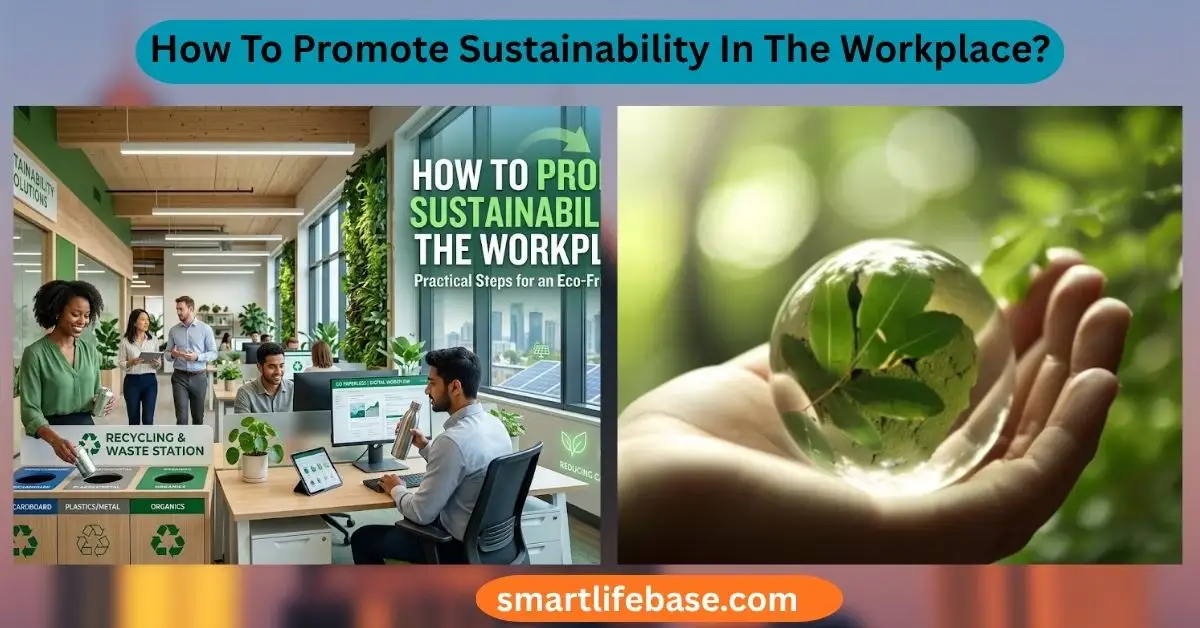
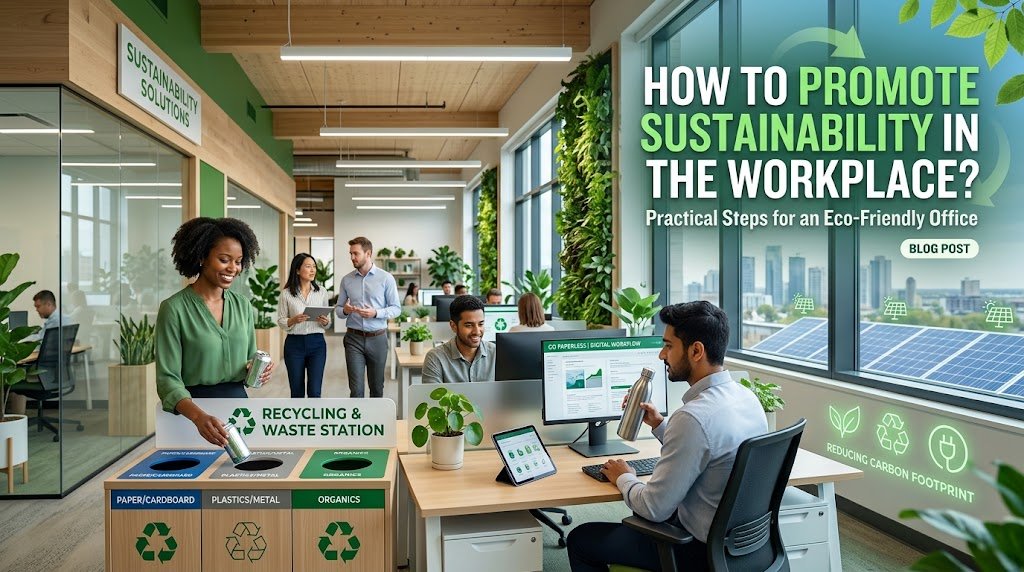
Learn how to promote sustainability in the workplace with easy steps, policy ideas, and tools. Boost engagement, cut costs, and meet ESG goals starting today. Set targets, empower teams, redesign processes, and measure results across energy, waste, and travel. If you want to promote sustainability in the workplace, start with clear goals and simple steps.
I have helped teams do this across offices, warehouses, and labs. In this guide, I show what works, why it matters, and how to scale. You will learn the full path to sustainability in the workplace, from policy to daily habits to data that proves impact.
What Is Sustainability In The Workplace?
Sustainability in the workplace means using fewer resources and creating less harm. It covers energy, water, waste, travel, buying, and culture. It also links to health, equity, and good governance. The aim is simple: lower impact, cut risk, and boost value.
Sustainability in the workplace is not a one-time project. It is a system. It blends smart design, better tools, and people’s habits. It must align with goals and budgets. It should meet standards such as ISO 14001 and the GHG Protocol.
Source: folderit.com
The Business Case And Key Benefits
Leaders fund what saves money, reduces risk, and wins talent. Sustainability in the workplace checks all three boxes. Energy savings often pay back fast. Waste cuts lower fees. Efficient travel policies reduce spend.
It also helps with rules, incentives, and bid demands. Many clients now ask for emissions data. A strong plan builds brand trust and reduces risk in supply chains. It can lift morale and retention too.

Source: powell-software.com
How To Build A Practical Sustainability Strategy
A good plan is clear, staged, and tracked. Use this framework.
- Set scope and vision. Define why and what you will measure.
- Build a baseline. Gather data on energy, water, waste, and travel.
- Pick targets. Use S.M.A.R.T. goals. Consider science–based targets.
- Prioritize actions. Rank by impact, cost, and ease.
- Assign owners. Name who leads each stream and set roles.
- Fund the work. Use life cycle cost and total cost of ownership.
- Pilot fast. Test in one site. Learn. Then scale.
- Train and engage. Create green teams and champions.
- Report often. Share wins and gaps with dashboards.
- Improve each quarter. Audit results and reset plans.
This is how sustainability in the workplace moves from talk to action. Start small. Prove value. Then grow.

Source: wastewiseproductsinc.com
Cut Energy Use And Emissions
Energy is the largest lever in many offices and plants. Focus on no-cost and low-cost steps first.
- Run an energy walk-through. Fix leaks in air, heat, and time settings.
- Install LEDs and smart controls. Add sensors for light and space use.
- Tune HVAC. Use schedules, setpoints, and demand control ventilation.
- Buy efficient gear. Look for ENERGY STAR and design for right-sizing.
- Shift to clean power. Explore rooftop solar, PPAs, or green tariffs.
- Manage load peaks. Use timers and staggered starts.
- Use ISO 50001 to lock in gains.
Track Scope 1 and 2 emissions with the GHG Protocol. This is a core part of sustainability in the workplace.

Source: sigmaearth.com
Manage Waste And Build Circular Habits
Waste costs twice. You pay to buy and to toss. Aim for less waste at the start.
- Follow the 5 Rs: refuse, reduce, reuse, repair, recycle.
- Switch to reusables in kitchens and events.
- Set clear bins with signs. Keep streams clean and simple.
- Right-size printers and default to duplex and black-and-white.
- Recycle e-waste with certified vendors. Wipe data and track items.
- Compost where allowed. Keep it clean with training and checks.
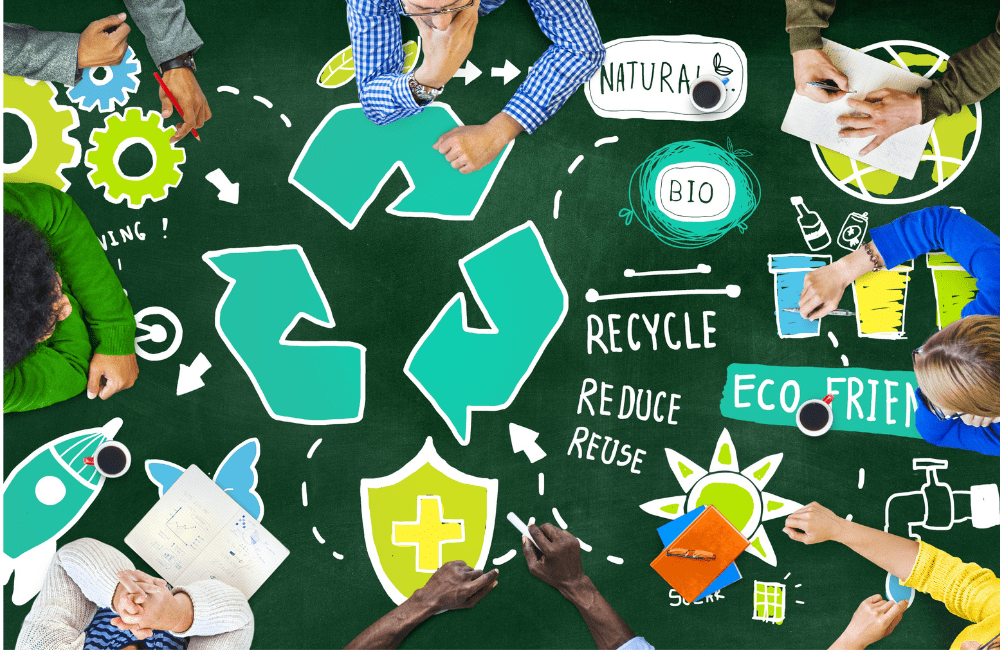
Measure diversion rates by weight. Share wins in team updates. This builds pride and lifts sustainability in the workplace.
Source: folderit.com
Buy Better: Sustainable Procurement
Your impact sits in what you buy. Scope 3 is often the largest share.
- Write a supplier code. Include labor, safety, and environment.
- Add ESG weights in bids. Score carbon, water, and waste.
- Use life cycle cost, not just price. Add upkeep and end-of-life.
- Ask for ecolabels like EPEAT or FSC where fit.
- Cut single-use items. Rent or share tools when you can.
- Partner with key vendors. Co-design lower-impact options.
Make buying rules clear and easy to follow. This is where sustainability in the workplace grows fast.
Source: giftinnovations.ie
Greener Commuting And Business Travel
Travel can be a big slice of your carbon total. Simple policy shifts help.
- Support remote and hybrid work. Right-size office space.
- Offer pre-tax transit and safe bike storage.
- Install EV charging and preferred parking for carpools.
- Choose rail over air for short trips when time allows.
- Cap flights with virtual-first rules. Use carbon budgets per team.
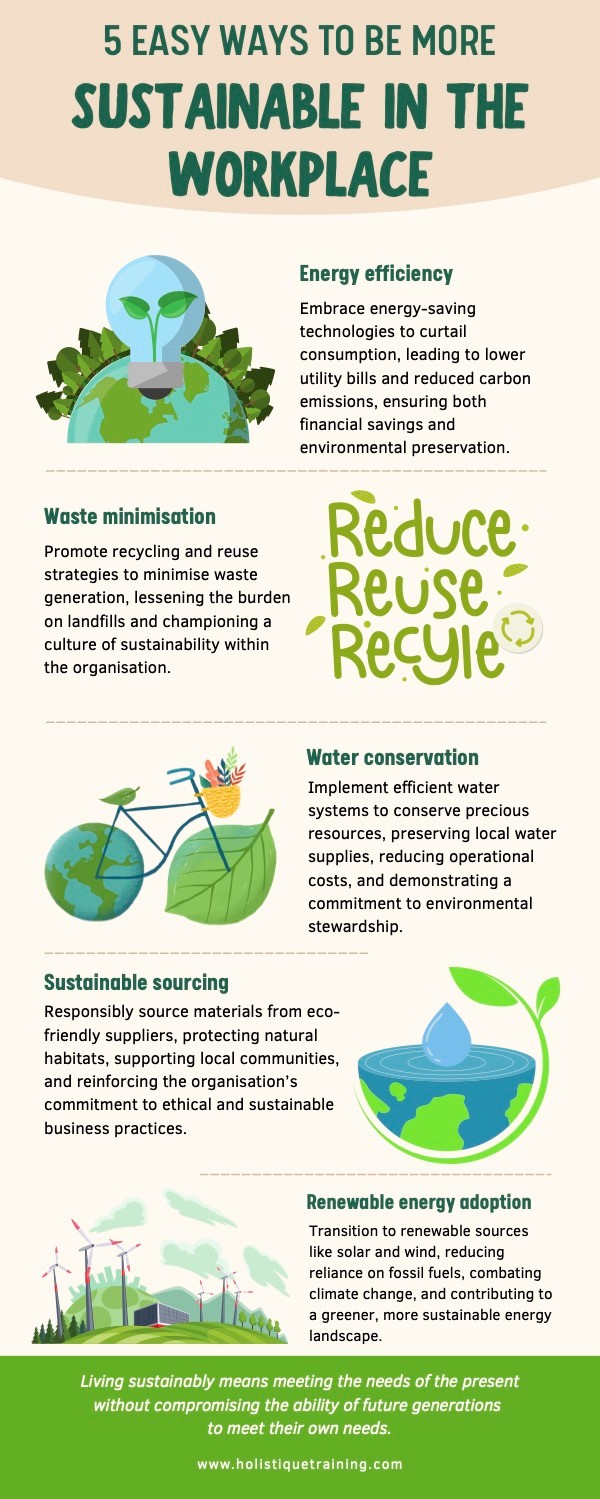
Share travel dashboards. Celebrate teams that meet targets. These steps make sustainability in the workplace real day-to-day.
Source: holistiquetraining.com
Culture, Training, And Engagement
People make change stick. Tools help, but habits win.
- Form a green team. Pick reps from each unit.
- Train managers. Give them scripts and quick wins.
- Use nudges. Place bins well. Set smart defaults.
- Run themed sprints. One month on energy, then waste, then travel.
- Recognize wins. Share stories and small rewards.
I learned this the hard way. In one office, new bins failed at first. Why? Signs were bad, and lids were wrong. We fixed the labels, moved bins side by side, and trained floor leads. Contamination fell by half in two weeks. That is the power of simple design in sustainability in the workplace.

Source: eevery.co
Measure, Report, And Assure
Data builds trust. It guides spend and proves value.
- Pick core KPIs. Energy per square foot, water per occupant, waste diversion, and emissions by scope.
- Build a baseline year. Fill gaps with clear methods.
- Use the GHG Protocol for emissions. Track Scope 1, 2, and key Scope 3.
- Align with ISO 14001 for systems. Audit once a year.
- Report in a simple dashboard. Update monthly or quarterly.
- Avoid greenwashing. Disclose limits, errors, and plans to fix.
Share results with staff and leaders. Clear data is central to sustainability in the workplace.
Reduce Your Digital And IT Footprint
IT use drives energy and e-waste. Small steps add up.
- Set power plans on all devices. Enforce screen and sleep modes.
- Right-size cloud use. Delete idle instances and old data.
- Pick efficient gear. Use EPEAT and ENERGY STAR.
- Extend device life. Repair before you replace.
- Reuse and recycle with certified partners. Track serials and outcomes.
Digital cleanup days are fun and useful. They also show real gains in sustainability in the workplace.
Health, Equity, And Wellbeing
Green work should also be good work. People thrive in safe, fair, and healthy spaces.
- Improve air and light. Check CO2, filters, and daylight access.
- Boost comfort. Use thermal zones and quiet areas.
- Make programs inclusive. Offer support for shift workers and all sites.
- Use clear language and signage. Invite feedback and co-design.
Standards like WELL and LEED can guide you. Tie these to your plan for sustainability in the workplace.
Common Pitfalls And How To Avoid Them
I have seen teams stall for avoidable reasons. Here is what to watch.
- No baseline. You cannot manage what you do not measure.
- Too many goals. Pick a few and deliver early wins.
- Tech-first bias. Start with people and ops. Then add tools.
- Weak vendor claims. Ask for third-party proof and test in pilots.
- Bad data hygiene. Document methods and track changes.
- Ignoring Scope 3. Start with top categories and refine.
Once, we rolled out compost across sites at once. It flopped. We reset with one pilot, tight signage, and daily checks. It worked, and then we scaled. This is a core lesson in sustainability in the workplace: pilot, learn, grow.
A Simple 12-Month Roadmap
You can do a lot in one year with focus.
Quarter 1
- Build a baseline for energy, water, waste, and travel.
- Form the green team. Set three targets.
Quarter 2
- Launch no-cost energy fixes and bin redesign.
- Add hybrid work policy and transit perks.
Quarter 3
- Upgrade lights and controls in two sites.
- Start supplier code and a pilot for key items.
Quarter 4
- Add clean power options where fit.
- Publish a short progress report and set next year goals.
This plan makes sustainability in the workplace real and paced.
Frequently Asked Questions: How To Promote Sustainability In The Workplace?
What is the first step to start sustainability in the workplace?
Begin with a simple audit and baseline. Pick three high-impact actions and assign clear owners.
How much does a workplace sustainability program cost?
Many wins are low-cost. Use life cycle cost to show that efficient gear and design often pay back fast.
How do small businesses promote sustainability in the workplace?
Start with energy checks, bin upgrades, and smart travel rules. Use free tools and local rebates to stretch budget.
How do we measure success without complex software?
Track a few KPIs in a shared sheet or dashboard. Update monthly and keep methods simple and clear.
How can I get leaders on board?
Show quick wins with numbers and staff stories. Link goals to cost savings, risk, and client demands.
What about remote workers and home offices?
Offer tips, small stipends, and guidance on efficient gear. Count avoided commute miles and share best practices.
How do we avoid greenwashing when we promote sustainability in the workplace?
Report methods, gaps, and limits. Use recognized standards and third-party assurance where possible.
Conclusion
Real change comes from clear goals, simple actions, and steady proof. Start with a baseline, pick quick wins, and build momentum with people and process. Keep your focus on sustainability in the workplace, and let data guide each next step.
Take one action this week: form a green team, fix an energy leak, or redesign your bins. Share what you learn, and invite others in. If you found this helpful, subscribe for more guides or leave a comment with your next step.