Learn how can we be environmentally friendly with easy swaps, money-saving habits, and zero-waste tips. Start today for a greener home and community. Choose low-waste habits, save energy, eat greener, and support sustainable systems. You want clear, proven steps that work in real life. You will get them here. I have guided homes and teams through audits, behavior shifts, and upgrades.
Together, we asked a simple question: How can we be environmentally friendly? The answer blends daily choices with smart systems. Stay with me as we break it down into simple moves you can start today.
What It Means To Be Environmentally Friendly
Being environmentally friendly means making choices that protect nature, climate, and health. It covers energy, water, food, travel, and the stuff we buy. It also includes how we vote, invest, and build community. When we ask, How can we be environmentally friendly?, we look at our impact across the full life cycle of goods and services.
A few key ideas help:
- Carbon footprint is the total greenhouse gases from your actions.
- Life cycle thinking checks impact from raw material to disposal.
- Circular economy keeps materials in use and cuts waste.
- Biodiversity is the web of life that supports food, water, and health.
I have seen small moves stack up. In one home audit, we found three drafts around a door. A $15 seal kit cut heating use and made the room quiet and warm. How can we be environmentally friendly? Start small, measure, and repeat.
Why It Matters: Climate, Nature, Health, and Equity
Climate change drives heat, floods, and fires. Cutting emissions slows risk and cost. Nature loss hurts farms, water, and jobs. Air and water pollution harm health and raise bills. Equity matters too. The most at risk often have the least power.
Research shows energy upgrades save money and cut emissions. Clean air laws lower deaths and boost workdays. When we ask, How can we be environmentally friendly?, we link personal gains with public good. The result is safer homes, lower bills, and a stable future.
A Simple Action Framework: Avoid, Reduce, Switch, Support
How can we be environmentally friendly? Use four steps you can repeat in any area.
- Avoid: Skip what you do not need. Say no to single-use. Plan trips to avoid extra miles.
- Reduce: Use less. Right-size your fridge. Trim hot water time. Share tools.
- Switch: Pick cleaner options. Choose renewables, heat pumps, trains, or plant-rich meals.
- Support: Back better systems. Buy from ethical brands. Vote for clean energy. Join local groups.
This method works at home and work. I use it with teams to map quick wins first. Then we fund bigger moves with the savings.

Home Energy: Heat, Cool, Light, and Power
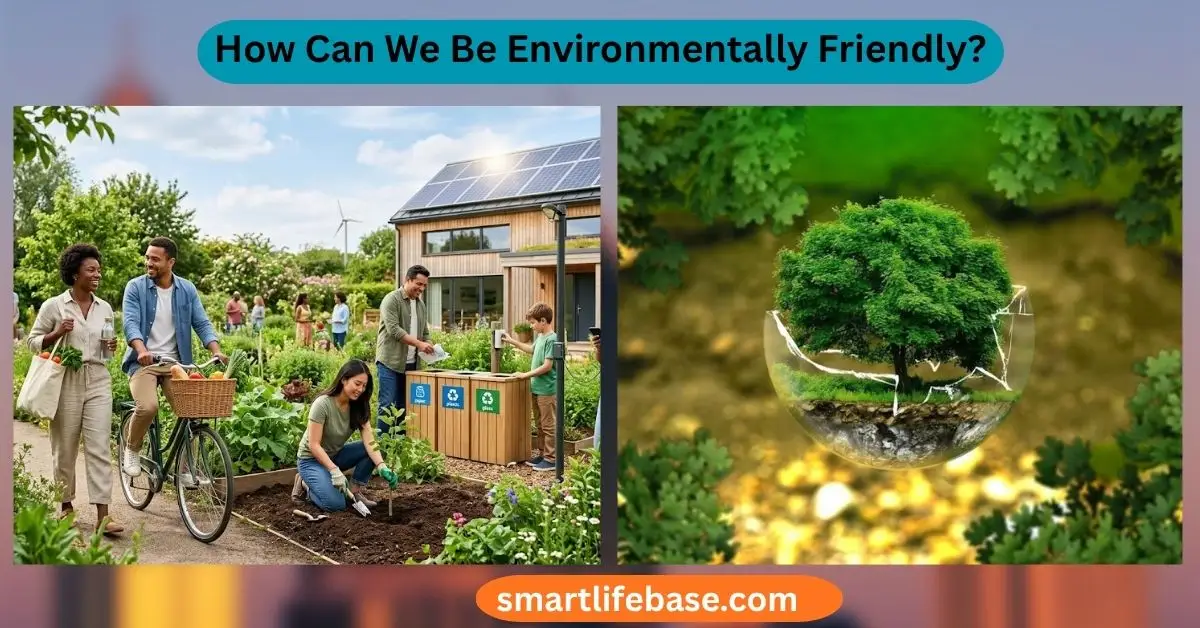
How can we be environmentally friendly at home? Start where energy use is high. Heating, cooling, and hot water drive most bills.
- Seal and insulate: Fix drafts, add attic insulation, and close gaps. Small materials. Big comfort.
- Set thermostats smart: Lower heat a bit in winter. Raise cooling a bit in summer.
- Upgrade equipment: Heat pumps, efficient water heaters, and induction stoves cut energy and indoor pollution.
- Choose LEDs: They last long and use far less power.
- Add renewables: Rooftop solar or a green power plan can offset most of your use.
From my own retrofit, sealing and a heat pump cut my winter gas use to zero. The house got quieter. Cook smells dropped with induction and a good hood. How can we be environmentally friendly? Fix leaks first, then upgrade.
Food and Diet: Eat Well for You and the Planet
How can we be environmentally friendly with food? Focus on what you eat, not only on where it comes from.
- Go plant-rich: Beans, grains, fruits, and veggies have low impact and support health.
- Cut red meat: Even one or two fewer servings per week helps. Try swaps like lentil chili or tofu stir-fry.
- Reduce waste: Plan meals. Store food well. Use your freezer. Compost scraps.
- Buy seasonal and local when you can: It supports farms and cuts transport.
- Choose certified options: Look for labels that protect soil, water, and fish stocks.
Studies show plant-forward diets can halve food emissions. In our house, a Sunday batch cook cuts waste and saves time. How can we be environmentally friendly? Plan, swap, and store.

Travel and Commuting: Move Smarter
Transport is a big source of emissions. How can we be environmentally friendly on the go? Choose cleaner, fewer, and shorter trips.
- Walk, bike, or take transit for short trips.
- Carpool or use ride-share lines.
- If you drive, keep tires firm and speed steady.
- Switch to an electric car if it fits your budget and grid.
- Replace two short flights with one train ride when possible.
- Bundle errands to cut cold starts.
On a recent project, we shifted half our team’s days to remote. Commutes fell fast. Morale rose too. How can we be environmentally friendly? Rethink the trip before you start the engine.

Stuff, Waste, and the Circular Mindset
How can we be environmentally friendly with the stuff we buy? Buy less and buy better.
- Choose quality and repairable goods. Keep receipts and parts.
- Rent or borrow tools. Use libraries of things.
- Pick minimal packaging. Refill when you can.
- Reuse first, then recycle right. Know your local rules.
- Sell or donate items in good shape.
I once ran a 30-day buy-nothing rule with my team. We made a share list and swapped gear. The habit stuck. How can we be environmentally friendly? Share more, toss less.
Money, Policy, and Community: Scale Your Impact
Your dollars and your voice matter. How can we be environmentally friendly beyond the home? Back clean systems.
- Choose a bank or fund that avoids fossil fuel expansion if possible.
- Support local groups that plant trees and clean streams.
- Vote for clean energy, safe water, and resilient cities.
- Ask your building, school, or workplace to switch to green power.
Evidence shows policy shifts cut emissions at scale. Rebates and standards push markets to clean choices. I have helped teams use incentives to fund heat pumps and EVs. How can we be environmentally friendly? Align money and voice with your values.
Track Progress and Stay Motivated
What gets measured gets managed. How can we be environmentally friendly and stay on track? Make it simple.
- Use a carbon calculator to set a baseline.
- Pick three goals for 90 days. Example: cut food waste, seal drafts, try transit once a week.
- Track with a note app. Celebrate small wins.
- Share progress with a friend for support.
I keep a tiny dashboard. It shows power use, miles, and food waste. The small chart keeps me honest. How can we be environmentally friendly? Set goals, review, and adjust.
Frequently Asked Questions: How Can We Be Environmentally Friendly?
What is the most effective first step?
Seal drafts and switch to LEDs. These quick moves are cheap, fast, and save energy right away.
Does recycling still matter?
Yes, but reuse and reduction matter more. Follow local rules to avoid contamination and improve rates.
Are electric cars always greener?
Over their life, most are cleaner than gas cars. They get even cleaner as the grid adds renewables.
Is eating local better than eating plant-based?
Diet type matters more than distance for emissions. A plant-rich meal often beats a local meat-heavy one.
How can renters be environmentally friendly?
Focus on habits and plug-in upgrades. Use LEDs, smart plugs, window seals, and a portable induction cooktop.
Do small actions really add up?
Yes, if they are common and repeated. Pair small steps with wider choices and support good policy.
How much does a heat pump save?
It depends on climate and rates. Many homes cut heating energy by a third or more.
What if I cannot afford solar?
Pick a green power plan or join community solar if offered. Also, lower your use to cut your bill now.
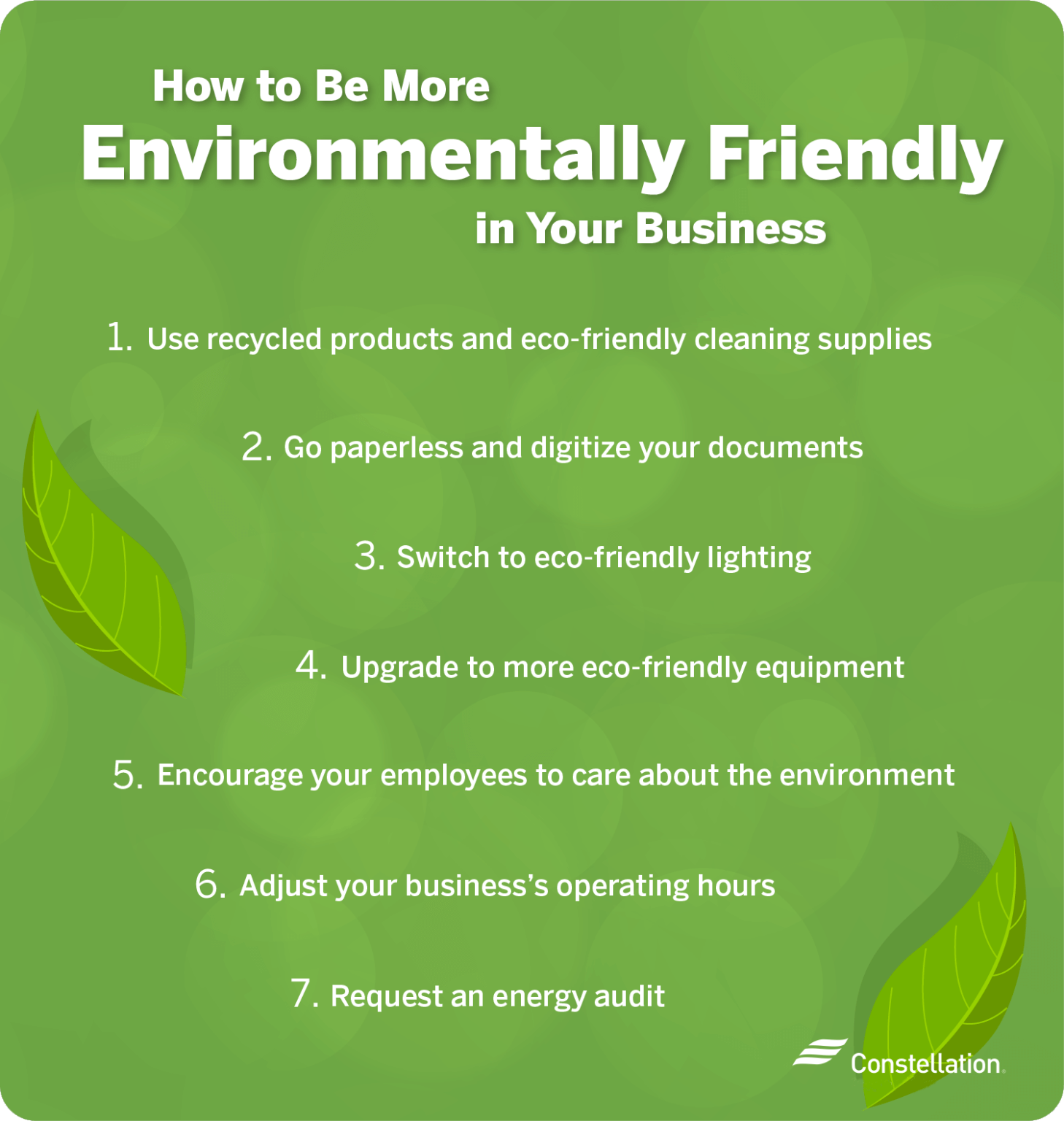
How can businesses be environmentally friendly?
Run an energy audit, set targets, and switch to renewables. Cut waste in operations and supply chains.
Is composting worth it?
Yes. It avoids methane from landfills and feeds soil. It also helps you see and cut food waste.
Conclusion
You now have a clear map to act with confidence. Focus on avoid, reduce, switch, and support. Start with drafts, LEDs, and a plant-forward meal plan. Then move to transit, heat pumps, and green power. Share wins to build momentum at home and at work.
How can we be environmentally friendly? We choose one better habit today and repeat it tomorrow. Take one action from this guide now. Subscribe for more in-depth guides, or leave a comment with your first step.